
Tyre Guides
Wheel Alignment vs Balancing: Ultimate Guide to Fix Tyre Problems
Jul
Wheel alignment vs balancing is an important difference every vehicle owner should understand before paying for tyre services. Although both procedures involve tyres and wheels, they solve completely different problems. Wheel alignment corrects incorrect wheel angles, while wheel balancing fixes uneven weight distribution that causes vibration.
Many drivers visit tyre shops believing that every tyre problem requires the same solution. However, the symptoms are different. A vehicle pulling to one side, uneven edge wear, or a steering wheel that is not straight usually indicates an alignment problem. A shaking steering wheel or vibration at certain speeds usually points toward a balancing issue.
Understanding wheel alignment vs balancing helps you choose the correct repair, avoid unnecessary expenses, and protect your tyres from premature wear. Correct wheel maintenance improves handling, fuel efficiency, comfort, and road safety.
For Kenyan motorists, this knowledge is especially important because vehicles experience challenging conditions such as Nairobi traffic congestion, highway driving, potholes, uneven roads, heavy loads, and long-distance travel between towns like Mombasa, Nakuru, Kisumu, and Eldoret.
This guide explains the difference between wheel alignment vs balancing, the symptoms of each issue, when you need each service, and how professional tyre maintenance improves vehicle performance.
Mufamo Automotives provides modern automotive solutions for private motorists, businesses, and fleet operators. You can also explore our vehicle tracking solutions for improved vehicle monitoring, security, and operational control.
What Is the Difference Between Wheel Alignment vs Balancing?
Wheel alignment adjusts the angles of your vehicle wheels so they point correctly and meet manufacturer specifications. Wheel balancing adjusts the weight distribution of the tyre and wheel assembly to eliminate vibration.
The simple difference:
- Wheel alignment fixes direction problems, pulling, and uneven tyre wear.
- Wheel balancing fixes vibration caused by uneven wheel weight.
Both services are important, but they address different vehicle symptoms.
Wheel Alignment vs Balancing: Understanding Wheel Alignment
Wheel alignment is the process of adjusting your vehicle’s suspension angles so the tyres maintain the correct contact with the road.
The goal of wheel alignment is to ensure:
- The vehicle drives straight.
- Tyres wear evenly.
- Steering responds correctly.
- The vehicle remains stable during braking and cornering.
Wheel alignment does not move the tyres themselves. Instead, technicians adjust suspension components that control wheel position.
Main Wheel Alignment Angles Explained
Camber
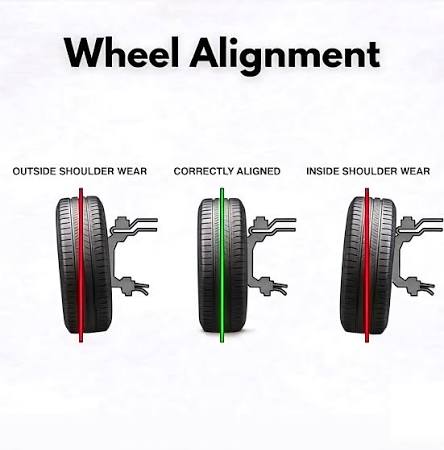
Camber refers to the inward or outward angle of the wheel when viewed from the front.
Incorrect camber can cause:
- Inside edge tyre wear
- Outside edge tyre wear
- Reduced grip during cornering
- Uneven tread contact
Toe
Toe describes whether tyres point slightly inward or outward when viewed from above.
Incorrect toe settings may cause:
- Rapid tread wear
- Feathering patterns
- Steering instability
- Increased tyre replacement costs
Caster
Caster affects steering stability and how the steering wheel returns after turning.
Incorrect caster can create:
- Poor steering feel
- Vehicle drifting
- Reduced straight-line stability
Symptoms That Indicate a Wheel Alignment vs BalancingProblem
Understanding symptoms is essential when comparing wheel alignment vs balancing.
Vehicle Pulls to One Side
If your vehicle moves left or right while driving on a straight road, the wheel angles may be incorrect.
Possible causes include:
- Incorrect toe adjustment
- Uneven camber
- Suspension damage
- Road impact damage
Steering Wheel Is Off-Centre
If your steering wheel is not straight while driving straight, alignment should be checked.
Uneven Tyre Wear
Alignment problems commonly create:
- Inner shoulder wear
- Outer shoulder wear
- Feathered tread patterns
Poor Vehicle Handling
Drivers may notice:
- Reduced cornering confidence
- Steering instability
- Vehicle movement during braking
Wheel Alignment vs Balancing: Understanding Wheel Balancing
Wheel balancing focuses on the weight distribution of the tyre and wheel assembly.
Even a small imbalance can create vibration because the wheel rotates thousands of times during driving.
During balancing, technicians:
- Mount the wheel on balancing equipment.
- Spin the wheel.
- Detect heavy areas.
- Add balancing weights.
- Confirm smooth rotation.
Symptoms That Indicate a Wheel Balancing Problem
Steering Wheel Vibration
A shaking steering wheel, especially between certain speeds, is one of the most common balancing symptoms.
Seat or Floor Vibration
Rear wheel imbalance may cause vibration through:
- Seats
- Floor area
- Vehicle body
Vibration After Installing New Tyres
New tyres should always be balanced after fitting.
Uneven Rotation
An unbalanced wheel does not rotate smoothly, creating unnecessary stress.
Wheel Alignment vs Balancing Comparison Table
| Feature | Wheel Alignment | Wheel Balancing |
|---|---|---|
| Purpose | Correct wheel angles | Correct weight distribution |
| Fixes | Pulling and uneven wear | Vibration |
| Main Equipment | Alignment machine | Balancing machine |
| Main Symptom | Vehicle drifts | Steering shakes |
| Required After | Suspension repairs | New tyre installation |
| Affects | Handling | Driving comfort |
Wheel Alignment vs Balancing: Which Service Do You Need?
The correct choice depends on the symptom.
| Problem | Recommended Service |
|---|---|
| Vehicle pulls left or right | Wheel alignment |
| Steering vibration | Wheel balancing |
| Uneven tyre edges | Wheel alignment |
| Vibration at highway speeds | Wheel balancing |
| New tyres installed | Wheel balancing |
| Suspension replacement | Wheel alignment |
If you are unsure, a professional inspection can identify the correct solution before unnecessary repairs are performed.
When Should You Get Wheel Alignment?
Wheel alignment should be checked when:
- Installing new tyres
- Replacing suspension parts
- Hitting large potholes
- Vehicle pulling occurs
- Steering feels unusual
- Tyres show uneven wear
Kenyan roads can affect alignment because of:
- Pothole impacts
- Rough surfaces
- Heavy loads
- Frequent braking in traffic
When Should You Get Wheel Balancing?
Wheel balancing is recommended when:
- Installing new tyres
- Repairing punctures
- Rotating tyres
- Feeling vibration
- Removing and reinstalling wheels
Wheel Alignment vs Balancing After Buying New Tyres
Many drivers ask whether new tyres require both services.
The answer depends on the vehicle condition.
New tyres should always receive:
- Wheel balancing
- Pressure checks
- Proper installation
Wheel alignment should also be checked if:
- Previous tyres wore unevenly.
- The vehicle pulled sideways.
- Suspension parts were repaired.
How Wheel Alignment vs Balancing Affects Tyre Life
Correct wheel maintenance helps tyres last longer.
Poor alignment can cause:
- Uneven tread wear
- Faster tyre replacement
- Reduced road grip
Poor balancing can cause:
- Vibration
- Uneven rotation
- Reduced driving comfort
Together, alignment and balancing improve tyre performance and safety.
Common Mistakes Drivers Make
Replacing Tyres Without Finding the Cause
New tyres will not solve alignment or balancing problems.
Ignoring Small Vibrations
Small issues can become expensive repairs later.
Assuming Alignment Fixes Vibration
Wheel alignment does not correct wheel imbalance.
Skipping Checks After Pothole Damage
Road impacts can affect suspension and wheel angles.
Tyre Maintenance Tips for Kenyan Drivers
To improve tyre performance:
- Check tyre pressure regularly.
- Rotate tyres according to manufacturer recommendations.
- Inspect tread condition.
- Balance wheels after tyre installation.
- Check alignment after major impacts.
For businesses operating several vehicles, proper monitoring is essential. Mufamo Automotives offers fleet management solutions that help businesses improve vehicle efficiency, monitoring, and maintenance planning.
Upgrade Your Vehicle With Smart Automotive Solutions
Beyond tyre maintenance, modern technology helps improve vehicle safety and efficiency.
Mufamo Automotives provides:
- Professional GPS tracker installation services
- Advanced dash camera solutions
- Reliable reverse camera systems
- Premium car alarm systems
- Browse automotive accessories
These solutions help protect vehicles, improve driver awareness, and support smarter vehicle ownership.
Frequently Asked Questions
Wheel Alignment vs Balancing: Which One Should I Do First?
The correct service depends on the problem. Pulling and uneven tyre wear usually require wheel alignment, while vibration usually requires balancing.
Can Wheel Alignment vs Balancing Fix Uneven Tyre Wear?
Wheel alignment is normally the solution for uneven edge wear. Balancing helps correct vibration caused by uneven wheel weight.
Does Wheel Alignment vs Balancing Improve Driving Comfort?
Yes. Proper alignment improves handling, while balancing reduces vibration and improves ride comfort.
How Often Should Wheel Alignment Be Checked?
Check alignment after suspension repairs, major pothole impacts, tyre replacement, or when steering problems appear.
Do New Tyres Need Wheel Balancing?
Yes. Balancing ensures the tyre and wheel rotate smoothly after installation.
Can Bad Alignment Damage Tyres?
Yes. Incorrect wheel angles can cause premature and uneven tyre wear.
Conclusion
Understanding wheel alignment vs balancing allows drivers to choose the right tyre service and avoid unnecessary costs. Wheel alignment corrects wheel angles, while wheel balancing eliminates vibration caused by uneven weight distribution.
If your vehicle pulls to one side, develops uneven tyre wear, or experiences steering vibration, the correct diagnosis is important. Regular inspections, especially after potholes, tyre changes, or suspension repairs, help maintain safer and smoother driving.
For Kenyan motorists and businesses, combining proper tyre care with advanced automotive technology ensures better reliability, efficiency, and vehicle performance.
Your Trusted Automotive Technology & Vehicle Security Partner in Kenya
Whether you’re securing a personal vehicle, managing a commercial fleet, or upgrading your vehicle with the latest automotive technology, Mufamo Automotives delivers reliable, high-quality solutions backed by professional installation and exceptional customer support. From GPS vehicle tracking and fleet management systems to car security, reverse cameras, parking sensors, dash cameras, and premium automotive accessories, we help keep your vehicles safer, smarter, and more efficient.
Contact our team today for expert advice, product recommendations, or a customized quotation.
WHY CHOOSE MUFAMO AUTOMOTIVES
✔ Professional Vehicle Security Solutions
✔ Advanced GPS Tracking & Fleet Management
✔ Genuine Automotive Accessories
✔ Expert Installation Services
✔ Wholesale & Business Partnership Opportunities
✔ Serving Nairobi, Mombasa, Eldoret, Busia, Uasin Gishu, Tiktac Kona, and beyond.
Contact Mufamo Automotives
Email: sales@mufamoautomotives.co.ke
Phone: +254 762 228 888
Branches
- Nairobi – Kumasi Road & Gilgil Road
- Eldoret – Uasin Gishu, Eldoret CBD
- Busia – Burumba
- Mombasa – Tiktac Kona
Website: https://mufamoautomotives.co.ke
Sales & Wholesale Enquiries
For pricing, stock availability, bulk purchases, reseller opportunities, and business partnerships, contact our sales team for competitive pricing and reliable supply solutions.
Request a Quote today and experience trusted automotive technology, vehicle security, and fleet management solutions from Mufamo Automotives.
