
Tyre Guides
Tyre Rotation Pattern: Ultimate Guide for FWD, RWD & 4×4
Jul
A correct tyre rotation pattern helps tyres wear evenly, improves vehicle handling, and extends the lifespan of your investment. However, many drivers assume that all vehicles use the same rotation method, which can lead to incorrect tyre movement and uneven tread wear.
The correct rotation method depends mainly on your vehicle’s drivetrain system, tyre design, and usage conditions. A front-wheel-drive car puts different forces on tyres compared to a rear-wheel-drive pickup or a four-wheel-drive SUV.
When tyres remain in the same position for too long, they experience uneven stress. Front tyres may wear faster because they handle steering, braking, and acceleration forces. Rear tyres may wear differently depending on the drivetrain and vehicle load.
For Kenyan motorists, proper tyre rotation is especially important due to varied driving conditions. Vehicles operating in Nairobi traffic, travelling on highways to Mombasa or Eldoret, or handling rough rural roads experience different tyre stresses that affect wear patterns.
This guide explains the different tyre rotation patterns for front-wheel-drive (FWD), rear-wheel-drive (RWD), and 4×4 vehicles, when to rotate tyres, and how proper maintenance protects your vehicle.
Mufamo Automotives provides professional automotive solutions for safer and smarter driving. Explore our vehicle tracking solutions (vehicle-tracking), fleet management solutions (fleet-management-solutions), vehicle security systems (car-security-systems), and quality automotive accessories for motorists and businesses across Kenya.
What Is a Tyre Rotation Pattern?
A tyre rotation pattern is the planned method of moving tyres from one wheel position to another to ensure even wear. The correct pattern depends on whether your vehicle is front-wheel drive, rear-wheel drive, all-wheel drive, or uses directional tyres.
Regular rotation helps:
- Extend tyre lifespan
- Improve handling
- Maintain balanced grip
- Reduce uneven wear
- Improve driving safety
Why Tyre Rotation Is Important
Every tyre position experiences different forces.
For example:
Front tyres often handle:
- Steering
- Most braking force
- Engine weight in many vehicles
- Cornering stress
Rear tyres often handle:
- Vehicle stability
- Load distribution
- Drive force in RWD vehicles
Without rotation, one pair of tyres may wear significantly faster than the others.
A proper tyre rotation pattern allows all four tyres to share these responsibilities over time.
How Often Should You Follow a Tyre Rotation Pattern?
Most manufacturers recommend rotating tyres approximately every:
- 8,000 to 10,000 kilometres
- During regular service intervals
- When uneven wear appears
The exact interval depends on:
- Vehicle type
- Tyre design
- Driving habits
- Road conditions
- Load carried
Commercial vehicles and vehicles operating on rough roads may require more frequent checks.
Front-Wheel Drive Tyre Rotation Pattern (FWD)
Front-wheel-drive vehicles send engine power to the front wheels.
Common examples include:
- Small cars
- Sedans
- Hatchbacks
- Compact SUVs
Because the front tyres perform multiple tasks, they often wear faster.
They handle:
- Acceleration
- Steering
- Braking
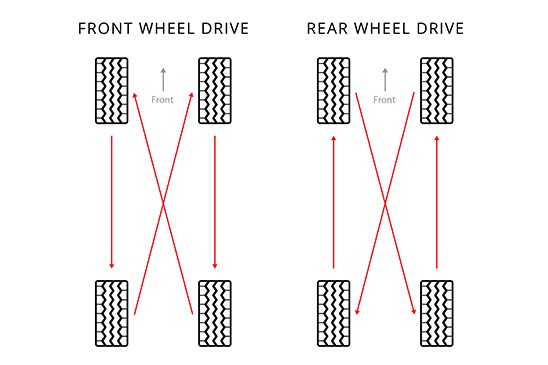
Forward Cross Rotation Pattern
The forward cross pattern is commonly used for many FWD vehicles.
Movement:
- Front tyres move straight to the rear.
- Rear tyres cross when moving to the front.
Example:
| Original Position | New Position |
|---|---|
| Front Left | Rear Left |
| Front Right | Rear Right |
| Rear Left | Front Right |
| Rear Right | Front Left |
This helps balance front tyre wear.
Rear-Wheel Drive Tyre Rotation Pattern (RWD)
Rear-wheel-drive vehicles send engine power to the rear wheels.
Common examples include:
- Pickups
- Performance vehicles
- Some SUVs
- Commercial vehicles
The rear tyres experience additional acceleration forces.
Rearward Cross Rotation Pattern
A common RWD rotation method is the rearward cross.
Movement:
- Rear tyres move straight to the front.
- Front tyres cross when moved to the rear.
Example:
| Original Position | New Position |
|---|---|
| Rear Left | Front Left |
| Rear Right | Front Right |
| Front Left | Rear Right |
| Front Right | Rear Left |
This balances wear caused by rear-wheel power delivery.
4×4 and AWD Tyre Rotation Pattern
Four-wheel-drive and all-wheel-drive vehicles distribute power to multiple wheels.
Examples include:
- SUVs
- Off-road vehicles
- Adventure vehicles
- Agricultural vehicles
These systems are sensitive to tyre size differences.
Uneven tyre wear can affect drivetrain performance.
X-Pattern Rotation
Many 4×4 vehicles use an X-pattern rotation.
Movement:
- Front left moves to rear right.
- Front right moves to rear left.
- Rear tyres move forward diagonally.
This helps maintain equal tyre wear.
Directional Tyre Rotation Pattern
Not all tyres can move freely between positions.
Directional tyres have tread designs that are designed to rotate in one direction only.
They usually have:
- Arrow markings
- Rotation indicators
- Performance-focused tread designs
For directional tyres:
- Front tyres move directly to the rear on the same side.
- Left tyres stay on the left.
- Right tyres stay on the right.
Incorrect movement can reduce:
- Water evacuation
- Grip
- Handling performance
Asymmetric Tyres and Rotation
Asymmetric tyres have different inner and outer tread designs.
They are marked:
- Inside
- Outside
These tyres must maintain correct orientation.
When rotating asymmetric tyres, technicians must ensure:
- The outside remains outside.
- The tyre direction remains correct.
Tyre Rotation Pattern Comparison Table
| Vehicle Type | Common Rotation Pattern | Main Purpose |
|---|---|---|
| FWD | Forward Cross | Reduce front wear |
| RWD | Rearward Cross | Balance drive wear |
| 4×4/AWD | X Pattern | Maintain equal wear |
| Directional | Same Side Rotation | Preserve tread direction |
| Asymmetric | Position-Based Rotation | Maintain tyre design |
Signs Your Vehicle Needs Tyre Rotation
Look out for:
Uneven Tread Wear
One tyre pair may appear more worn than another.
Vehicle Vibration
Uneven tyre wear can create vibration at certain speeds.
Reduced Handling
The vehicle may feel less stable during cornering.
Tyre Noise
Irregular wear can create additional road noise.
Benefits of Following the Correct Tyre Rotation Pattern
Longer Tyre Lifespan
Even wear allows all tyres to reach their expected mileage.
Better Safety
Balanced tyres improve grip and braking performance.
Improved Comfort
Even tread wear reduces vibration and noise.
Lower Operating Costs
Replacing four tyres together is usually more economical than replacing pairs frequently.
Tyre Rotation and Kenyan Driving Conditions
Kenyan roads expose vehicles to different challenges:
- Nairobi stop-and-go traffic
- Highway speeds
- Uneven rural roads
- Heavy commercial loads
- Dust and rough surfaces
These conditions increase tyre stress.
Regular rotation is especially important for:
- Matatus
- Delivery vehicles
- Fleet vehicles
- Pickups
- SUVs
Fleet operators can improve vehicle maintenance control using our commercial fleet solutions
Common Tyre Rotation Mistakes
Using the Wrong Pattern
Different drivetrains require different methods.
Ignoring Directional Tyres
Directional tyres must maintain their designed rotation direction.
Rotating Without Checking Alignment
Poor wheel alignment can continue causing uneven wear.
Waiting Until Tyres Are Damaged
Rotation should be preventative maintenance.
Professional Tyre Maintenance Checklist
A complete tyre service should include:
| Check | Purpose |
|---|---|
| Tyre Rotation | Balance wear |
| Pressure Check | Maintain correct inflation |
| Wheel Alignment | Prevent uneven wear |
| Balancing | Reduce vibration |
| Tread Inspection | Monitor tyre condition |
For additional vehicle upgrades, explore:
- Professional GPS tracker installation services
gps-tracking-installation - Explore our dash camera solutions
dash-cameras - Discover our reverse camera systems
car-reverse-cameras - Browse automotive accessories
car-accessories
Frequently Asked Questions
What is the best tyre rotation pattern?
The best tyre rotation pattern depends on your vehicle drivetrain, tyre type, and manufacturer recommendation.
How often should tyres be rotated?
Most vehicles should have tyres rotated every 8,000 to 10,000 kilometres.
Can I rotate directional tyres normally?
No. Directional tyres must maintain their designed rolling direction.
Do 4×4 vehicles need tyre rotation?
Yes. Equal tyre wear is especially important for 4×4 and AWD systems.
Does tyre rotation improve tyre life?
Yes. Regular rotation helps tyres wear evenly and last longer.
Can wrong tyre rotation damage my vehicle?
Incorrect rotation may reduce tyre performance and create uneven wear problems.
Conclusion
Following the correct tyre rotation pattern is one of the simplest ways to protect your tyres and improve vehicle performance. Whether you drive a front-wheel-drive car, rear-wheel-drive pickup, or 4×4 SUV, the correct rotation method helps distribute wear evenly and keeps your vehicle safer.
Regular tyre rotation combined with proper inflation, wheel alignment, and inspections can significantly extend tyre life and reduce unnecessary replacement costs.
For Kenyan motorists and businesses, maintaining tyres correctly is essential for reliable performance on city roads, highways, and challenging routes.
Your Trusted Automotive Technology & Vehicle Security Partner in Kenya
Whether you’re securing a personal vehicle, managing a commercial fleet, or upgrading your vehicle with the latest automotive technology, Mufamo Automotives delivers reliable, high-quality solutions backed by professional installation and exceptional customer support. From GPS vehicle tracking and fleet management systems to car security, reverse cameras, parking sensors, dash cameras, and premium automotive accessories, we help keep your vehicles safer, smarter, and more efficient.
Contact our team today for expert advice, product recommendations, or a customized quotation.
WHY CHOOSE MUFAMO AUTOMOTIVES
✔ Professional Vehicle Security Solutions
✔ Advanced GPS Tracking & Fleet Management
✔ Genuine Automotive Accessories
✔ Expert Installation Services
✔ Wholesale & Business Partnership Opportunities
✔ Serving Nairobi, Mombasa, Eldoret, Busia, Uasin Gishu, Tiktac Kona, and beyond.
Contact Mufamo Automotives
Email: sales@mufamoautomotives.co.ke
Phone: +254 762 228 888
Branches
- Nairobi – Kumasi Road & Gilgil Road
- Eldoret – Uasin Gishu, Eldoret CBD
- Busia – Burumba
- Mombasa – Tiktac Kona
Website: https://mufamoautomotives.co.ke
Sales & Wholesale Enquiries
For pricing, stock availability, bulk purchases, reseller opportunities, and business partnerships, contact our sales team for competitive pricing and reliable supply solutions.
Request a Quote today and experience trusted automotive technology, vehicle security, and fleet management solutions from Mufamo Automotives.
