
Autoparts
Best Tyre Load Index Explained | Complete Weight Guide
Jul
When buying replacement tyres, most drivers pay attention to the tyre size, tread pattern, or brand. However, one of the most important markings on the tyre sidewall is the tyre load index. This number tells you the maximum weight a single tyre can safely support when properly inflated.
Understanding the tyre load index is essential for maintaining your vehicle’s safety, stability, and handling. Choosing tyres with an incorrect load index can reduce braking performance, increase tyre wear, and even lead to tyre failure under heavy loads.
Whether you drive a compact hatchback, family sedan, SUV, pickup, van, or commercial truck in Nairobi, Mombasa, Eldoret, Kisumu, Nakuru, or anywhere in Kenya, understanding the tyre load index helps you make informed purchasing decisions.
At Mufamo Automotives, we help motorists choose tyres that match their vehicle manufacturer’s specifications while also offering vehicle tracking solutions, vehicle security systems, and premium automotive accessories.
What Is a Tyre Load Index?
The tyre load index is a numerical code found on the tyre sidewall that indicates the maximum weight one tyre can safely carry when inflated to its recommended pressure.
For example:
205/65R15 94H
The number 94 is the tyre load index, while H is the speed rating.
The higher the load index, the greater the tyre’s load-carrying capacity.
Where Is the Tyre Load Index Located?
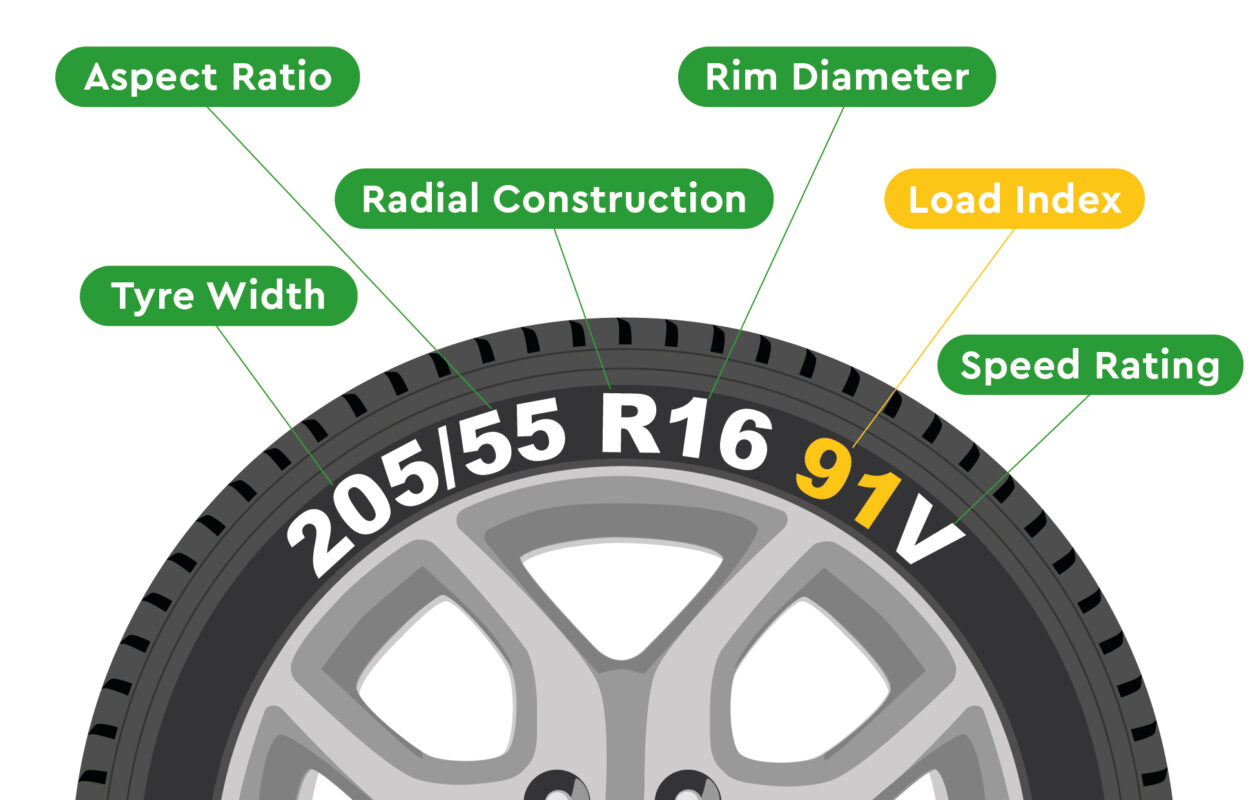
The tyre load index appears immediately after the tyre size on the sidewall.
Example:
195/65R15 91H
Breakdown:
- 195 = Tyre width
- 65 = Aspect ratio
- R = Radial construction
- 15 = Rim diameter
- 91 = Tyre load index
- H = Speed rating
If you’ve already learned how to interpret tyre sizes, you may also find our guide on what tyre aspect ratio means useful for understanding the complete tyre code.
How Does the Tyre Load Index Work?
The tyre load index does not directly show the weight in kilograms. Instead, each number corresponds to a specific maximum load according to international tyre standards.
Here are some common load indexes:
| Load Index | Maximum Load (kg) |
|---|---|
| 75 | 387 |
| 80 | 450 |
| 84 | 500 |
| 88 | 560 |
| 91 | 615 |
| 94 | 670 |
| 95 | 690 |
| 98 | 750 |
| 100 | 800 |
| 102 | 850 |
| 105 | 925 |
| 109 | 1,030 |
Always refer to the tyre manufacturer’s specifications and your vehicle owner’s manual before selecting replacement tyres.
Why the Tyre Load Index Matters
The tyre load index affects much more than weight capacity. It also influences vehicle safety, tyre longevity, and overall driving performance.
1. Vehicle Safety
Using tyres with the correct load index helps ensure they can safely support the vehicle, passengers, and cargo.
Tyres with a load index below the manufacturer’s recommendation may overheat, wear prematurely, or fail under heavy loads.
2. Better Handling
Correctly rated tyres maintain the vehicle’s intended handling characteristics.
Benefits include:
- Improved stability
- Better steering response
- Predictable cornering
- Consistent braking performance
3. Longer Tyre Life
Tyres operating within their designed load capacity wear more evenly and generally last longer.
Overloading tyres accelerates tread wear and increases the likelihood of sidewall damage.
4. Fuel Efficiency
Overloaded tyres create additional rolling resistance, which can increase fuel consumption.
Selecting the correct tyre load index helps maintain the fuel efficiency intended by the manufacturer.
How to Calculate Your Vehicle’s Load Requirements
Your vehicle’s Gross Vehicle Weight Rating (GVWR) specifies the maximum safe operating weight.
To estimate the minimum tyre load requirement:
- Find the vehicle’s maximum weight.
- Divide that figure by four.
- Choose tyres with a load index that meets or exceeds that value.
Remember that passengers, luggage, towing equipment, and cargo all contribute to the total load.
Can You Use a Higher Tyre Load Index?
Yes. In most cases, using a tyre with a higher tyre load index than recommended is acceptable, provided the tyre size and speed rating remain appropriate for your vehicle.
Advantages may include:
- Increased load capacity
- Improved durability
- Better resistance to heavy loads
However, tyres with a higher load index may have slightly stiffer sidewalls, which can affect ride comfort.
Can You Use a Lower Tyre Load Index?
No.
Installing tyres with a lower tyre load index than specified by the manufacturer is not recommended.
Potential risks include:
- Reduced load-carrying capacity
- Increased tyre temperatures
- Premature tyre wear
- Poor handling
- Increased risk of tyre failure
Always meet or exceed the manufacturer’s recommended load index.
Tyre Load Index for Different Vehicle Types
The appropriate tyre load index depends on the type of vehicle.
Passenger Cars
Most family sedans and hatchbacks use load indexes between 84 and 95.
SUVs
SUVs generally require higher load indexes due to their greater weight.
Typical range:
- 95–105
Pickups
Pickup trucks carrying cargo often require reinforced tyres with higher load ratings.
Vans
Commercial vans transporting goods should always use tyres that meet the manufacturer’s specified load capacity.
Commercial Trucks
Heavy commercial vehicles use specialised truck tyres with significantly higher load indexes designed for demanding operating conditions.
Tyre Load Index vs Speed Rating
Many motorists confuse the tyre load index with the speed rating.
| Tyre Load Index | Speed Rating |
|---|---|
| Indicates weight capacity | Indicates maximum operating speed |
| Numerical value | Letter designation |
| Example: 94 | Example: H |
| Safety under load | Performance at speed |
Both ratings are equally important when selecting replacement tyres.
Common Mistakes Drivers Make
Avoid these common mistakes when replacing tyres:
- Choosing tyres based only on price
- Ignoring the tyre load index
- Mixing different load ratings on the same axle
- Overloading the vehicle
- Using incorrect tyre pressures
Professional guidance helps ensure you select the correct tyres for your vehicle.
If you need assistance, contact our automotive specialists for expert recommendations.
Professional Tyre Installation
Selecting the correct tyre load index is only part of the process.
Professional installation should include:
- Wheel balancing
- Wheel alignment
- Tyre pressure adjustment
- Valve inspection
- Torque verification
While upgrading your tyres, you may also consider our reverse camera systems, our parking sensor solutions, or our dash camera solutions to enhance vehicle safety.
Tyre Maintenance Tips
To maximise tyre life:
- Check tyre pressures regularly.
- Inspect tyres for uneven wear.
- Rotate tyres every 8,000–10,000 km.
- Avoid exceeding the vehicle’s load limits.
- Replace damaged tyres promptly.
Fleet operators can also browse our fleet management systems to monitor vehicle usage, maintenance schedules, and operational efficiency.
Frequently Asked Questions
What is a tyre load index?
The tyre load index is a numerical code indicating the maximum weight a single tyre can safely support when properly inflated.
Can I fit tyres with a higher load index?
Yes. Using tyres with a higher load index is generally acceptable if the tyre size and speed rating remain suitable for your vehicle.
Can I use tyres with a lower load index?
No. A lower tyre load index reduces the tyre’s load-carrying capacity and may compromise safety.
Does the tyre load index affect ride comfort?
Higher load index tyres may have stiffer sidewalls, which can slightly alter ride comfort, but they provide greater load-carrying capability.
Where can I find the tyre load index?
It is printed on the tyre sidewall immediately after the tyre size and before the speed rating.
Conclusion
The tyre load index is one of the most important specifications on your tyre sidewall. It tells you how much weight each tyre can safely carry and plays a critical role in maintaining vehicle safety, stability, and performance.
Choosing the correct tyre load index helps prevent premature tyre wear, improves handling, and ensures your vehicle operates as intended by the manufacturer. Whether you drive a passenger car, SUV, pickup, or commercial vehicle, always select tyres that meet or exceed the recommended load rating.
If you’re unsure which tyres are right for your vehicle, Mufamo Automotives is ready to help with expert advice, quality products, and professional automotive solutions.
Your Trusted Automotive Technology & Vehicle Security Partner in Kenya
Whether you’re securing a personal vehicle, managing a commercial fleet, or upgrading your vehicle with the latest automotive technology, Mufamo Automotives delivers reliable, high-quality solutions backed by professional installation and exceptional customer support. From GPS vehicle tracking and fleet management systems to car security, reverse cameras, parking sensors, dash cameras, and premium automotive accessories, we help keep your vehicles safer, smarter, and more efficient.
Contact our team today for expert advice, product recommendations, or a customized quotation.
WHY CHOOSE MUFAMO AUTOMOTIVES
✔ Professional Vehicle Security Solutions
✔ Advanced GPS Tracking & Fleet Management
✔ Genuine Automotive Accessories
✔ Expert Installation Services
✔ Wholesale & Business Partnership Opportunities
✔ Serving Nairobi, Mombasa, Eldoret, Busia, Uasin Gishu, Tiktac Kona, and beyond.
Contact Mufamo Automotives
Email: sales@mufamoautomotives.co.ke
Phone: +254 762 228 888
Branches
- Nairobi – Kumasi Road & Gilgil Road
- Eldoret – Uasin Gishu, Eldoret CBD
- Busia – Burumba
- Mombasa – Tiktac Kona
Website: https://mufamoautomotives.co.ke
