
Vehicle Maintenance & Safety
Legal Tread Depth in Kenya: How Worn Is Too Worn to Drive?
Jul
Tyres are among the most important safety components on any vehicle. They are the only parts of your car that maintain direct contact with the road surface, meaning their condition affects braking, steering, acceleration, and overall vehicle stability.
Many motorists regularly service their engines, replace worn brake components, and upgrade vehicle technology but fail to inspect their tyres until a problem occurs. A tyre may still look usable while having reduced grip due to worn tread, uneven wear, ageing, or damage.
Understanding legal tread depth in Kenya helps drivers make informed decisions about tyre replacement and avoid operating vehicles with unsafe levels of wear. Proper tyre maintenance improves road safety, reduces unexpected breakdowns, and helps protect passengers and other road users.
Kenyan driving conditions make tyre care especially important. Vehicles experience different environments, including busy urban roads in Nairobi, highways connecting towns such as Nakuru and Eldoret, coastal routes around Mombasa, and rural roads where rough surfaces can accelerate tyre wear.
For private motorists, commercial operators, and fleet owners, regular tyre inspections should be part of responsible vehicle ownership. Mufamo Automotives provides professional automotive solutions that help Kenyan drivers improve vehicle safety, efficiency, and convenience through reliable products and installation services.
Understanding Legal Tread Depth in Kenya and Why It Matters
Legal tread depth in Kenya refers to the minimum amount of tread remaining on a tyre before it is considered excessively worn for safe road use.
The tread pattern on a tyre is not only designed to provide grip. It also performs important safety functions, including:
- Removing water from beneath the tyre
- Improving traction on wet roads
- Supporting braking performance
- Maintaining vehicle control when cornering
- Reducing the risk of losing grip
As tyres wear, the grooves become shallower. This reduces their ability to push water away from the contact surface, which can affect handling during rainy conditions.
A common misconception is that a tyre is safe as long as the tread pattern is still visible. However, tyre safety depends on several factors, including:
- Remaining tread depth
- Tyre age
- Inflation pressure
- Alignment condition
- Driving habits
- Road conditions
A tyre with visible tread may still require replacement if it has cracks, bulges, uneven wear, or other damage.
What Is the Legal Tread Depth in Kenya for Passenger Vehicles?
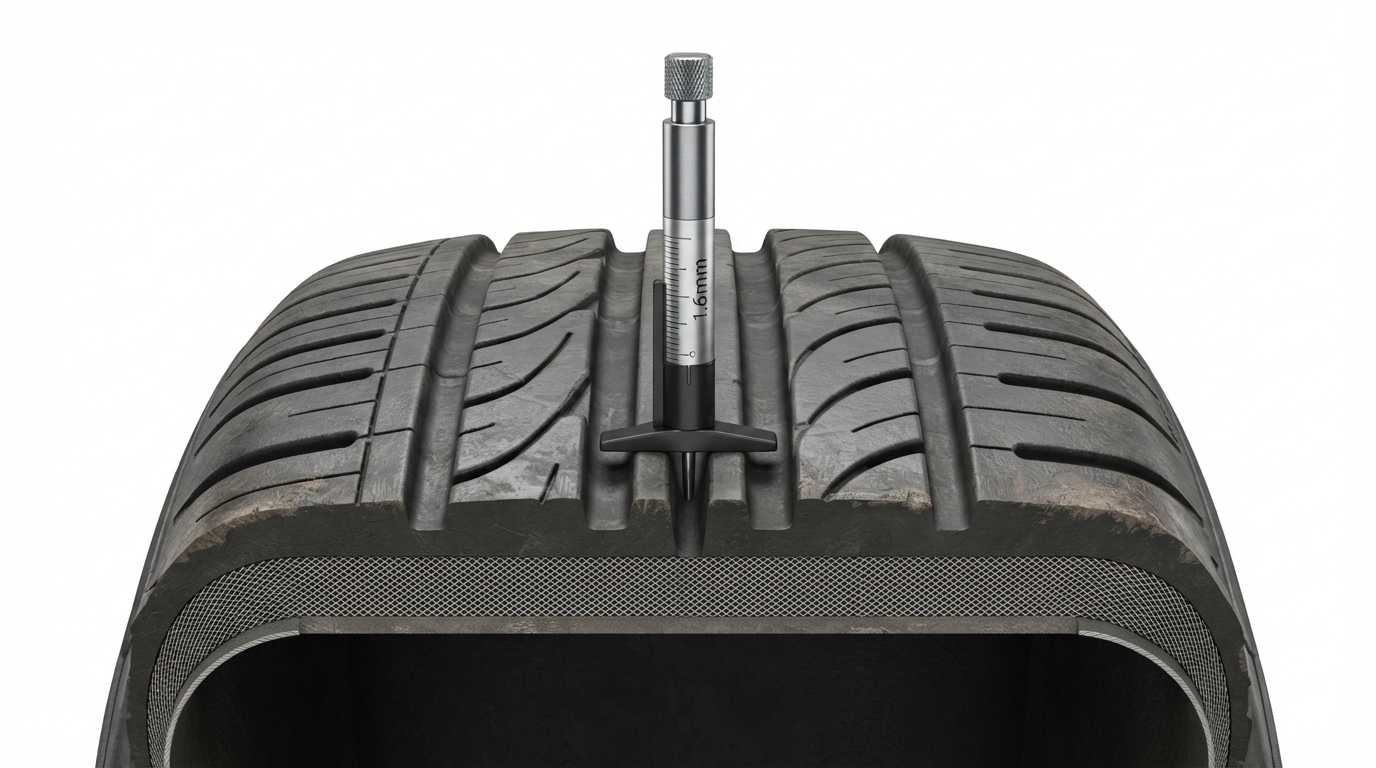
The commonly accepted minimum tread depth requirement for vehicle tyres is 1.6 mm across the main grooves of the tyre legal tread depth in Kenya.
Once a tyre reaches this point, it has reached the minimum acceptable limit and should be replaced.
However, waiting until the tyre reaches the absolute minimum is not always the safest approach. Tyre performance gradually reduces as tread wears down, particularly in wet conditions.
Many automotive professionals recommend planning replacement earlier, often when tread depth reaches approximately 3 mm, especially for vehicles that:
- Travel long distances
- Carry passengers regularly
- Operate commercially
- Drive frequently in rainy areas
The table below provides a general guide:
| Remaining Tread Depth | Condition | Recommended Action |
|---|---|---|
| 8–10 mm | New tyre condition | Normal operation |
| 5–7 mm | Good tread remaining | Continue monitoring |
| Around 3 mm | Wet-weather performance may reduce | Plan replacement |
| 1.6 mm or below | Minimum legal limit reached | Replace immediately |
Drivers should remember that tread depth is only one part of tyre safety. A tyre can have acceptable tread but still be unsafe due to structural damage or age.
Why Legal Tread Depth in Kenya Is Important for Road Safety
Maintaining correct tyre condition improves how a vehicle responds in everyday driving situations.
Better Grip During Rainy Conditions with legal tread depth in Kenya
Rain creates challenging driving conditions because water reduces friction between tyres and the road.
When tyres have sufficient tread depth, the grooves help move water away from the contact patch, allowing better contact with the road surface.
This is especially important in areas that experience seasonal rainfall, including:
- Nairobi
- Kisumu
- Nakuru
- Eldoret
- Mombasa
Worn tyres may increase the likelihood of:
- Reduced steering control
- Longer braking distances
- Poor cornering stability
- Loss of confidence while driving
Legal Tread Depth in Kenya and Braking Performance
A vehicle’s braking system depends on tyre grip to transfer stopping force to the road.
Even with high-quality brakes, worn tyres can reduce braking effectiveness because the tyre has less ability to maintain traction.
Factors that increase braking demands include:
- Emergency stops
- Wet roads
- Heavy traffic
- Carrying passengers
- Carrying cargo
- Highway driving
For businesses operating multiple vehicles, tyre condition is an important part of fleet safety and cost management. Mufamo Automotives helps companies improve vehicle operations through advanced fleet management solutions that support better monitoring, efficiency, and accountability.
How to Check Legal Tread Depth in Kenya at Home
Regular tyre inspections allow drivers to identify problems before they become serious safety concerns.
A simple inspection should be carried out regularly and should include checking:
- Tread depth
- Tyre pressure
- Sidewall condition
- Uneven wear patterns
- Visible damage
- Tyre age
Drivers should inspect tyres before:
- Long-distance trips
- Business journeys
- Holiday travel
- Carrying heavy loads
Using a Tyre Tread Depth Gauge
The most accurate way to measure legal tread depth in Kenya is by using a tyre tread depth gauge.
This tool measures the remaining legal tread depth in Kenya in millimetres and provides a more accurate result than visual inspection alone.
Professional inspection is useful because tyre wear is not always even. One tyre may appear acceptable while another may already require replacement.
Common causes of uneven tyre wear include:
- Poor wheel alignment
- Incorrect tyre pressure
- Suspension issues
- Overloading
- Incorrect tyre rotation
Correcting the cause of uneven wear can help prevent unnecessary tyre replacement.
Checking Tyre Wear Indicators with legal tread depth in Kenya
Most modern tyres include built-in wear indicators designed to show when the tread has reached the replacement stage.
These indicators appear as raised sections inside the tyre grooves.
When the tread surface becomes level with these indicators, the tyre has reached the end of its useful tread life.
Drivers should check multiple areas of the tyre because wear may occur differently across:
- Inner tread edges
- Outer tread edges
- Centre tread section
Can You Check Legal Tread Depth in Kenya Using a Coin?
Many drivers use a coin test as a quick way to check tyre wear.
While this method may help identify tyres that are obviously worn, it is not an accurate measurement of tread depth.
A coin cannot confirm whether a tyre has reached the exact legal measurement requirement.
For accurate results, drivers should use a proper tread depth gauge or seek professional inspection, especially when operating:
- Commercial vehicles
- Delivery vehicles
- Ride-hailing cars
- School transport vehicles
- Company fleets
Signs Your Tyres May Be Below the Legal Tread Depth in Kenya
Tyre problems often develop gradually, and many drivers notice them only after vehicle performance changes.
Common warning signs include:
Reduced Wet Weather Grip
If your vehicle feels unstable during rainfall or requires more correction while steering, worn tyres may be affecting traction.
Longer Stopping Distance
A vehicle that takes longer than usual to stop may have reduced tyre grip.
Visible Tread Wear
Look for:
- Very shallow grooves
- Smooth tread areas
- Visible wear indicators
- Uneven tread blocks
Sidewall Damage
Tread depth alone does not determine tyre safety.
A tyre may need replacement because of:
- Sidewall cracks
- Cuts
- Bulges
- Impact damage
Vehicle owners who want to improve overall protection can also explore Mufamo Automotives vehicle security products designed to help protect vehicles against theft and unauthorised access.
Factors That Affect Tyre Wear on Kenyan Roads for legal tread depth in Kenya
Tyre lifespan depends on several factors, including driving style, maintenance, and road conditions.
Road Conditions
Kenyan vehicles operate on a variety of surfaces, including:
- Highways
- Urban roads
- Gravel roads
- Construction areas
- Rural routes
Rough surfaces and potholes can accelerate tyre damage and uneven wear.
Driving Habits
Driving behaviour has a major impact on tyre lifespan.
Aggressive habits such as:
- Sudden acceleration
- Hard braking
- High-speed cornering
- Ignoring potholes
increase tyre stress.
Smooth driving improves safety and helps extend tyre service life.
Incorrect Tyre Pressure
Incorrect tyre inflation is one of the most common causes of premature tyre wear.
Underinflated tyres can cause:
- Increased fuel consumption
- Excess heat buildup
- Faster shoulder wear
- Reduced handling
Overinflated tyres can cause:
- Reduced road contact
- Faster centre wear
- Reduced comfort
Checking tyre pressure regularly is one of the easiest ways to improve tyre safety.
WHY CHOOSE MUFAMO AUTOMOTIVES
Professional Vehicle Security Solutions
Advanced GPS Tracking & Fleet Management
Genuine Automotive Accessories
Expert Installation Services
Wholesale & Business Partnership Opportunities
Serving Nairobi, Mombasa, Eldoret, Busia, Uasin Gishu, Tiktac Kona, Kenya, and beyond
Contact Mufamo Automotives
Email: sales@mufamoautomotives.co.ke
Phone: +254 762 228 888
Branches:
- Nairobi – Kumasi Road & Gilgil Road
- Eldoret – Uasin Gishu, Eldoret CBD
- Busia – Burumba
- Mombasa – Tiktac Kona
Website: https://mufamoautomotives.co.ke
