
Tyres & Wheel Care
Tyre Cupping: Why the Tread Looks Scalloped and Sounds Rough
Jul
Understanding Tyre Cupping and Its Warning Signs
Your vehicle’s tyres provide the only physical connection between your car and the road. Every acceleration, braking action, corner, and emergency manoeuvre depends on tyres maintaining proper contact with the driving surface. Because of this, tyre condition is one of the most important indicators of vehicle safety and mechanical health.
Many drivers inspect their tyres only for visible damage, low tread depth, or punctures. However, the shape and pattern of tyre wear can reveal hidden problems within the suspension, wheel balance, alignment system, or overall vehicle maintenance.
One of the most noticeable and concerning wear patterns is tyre cupping.
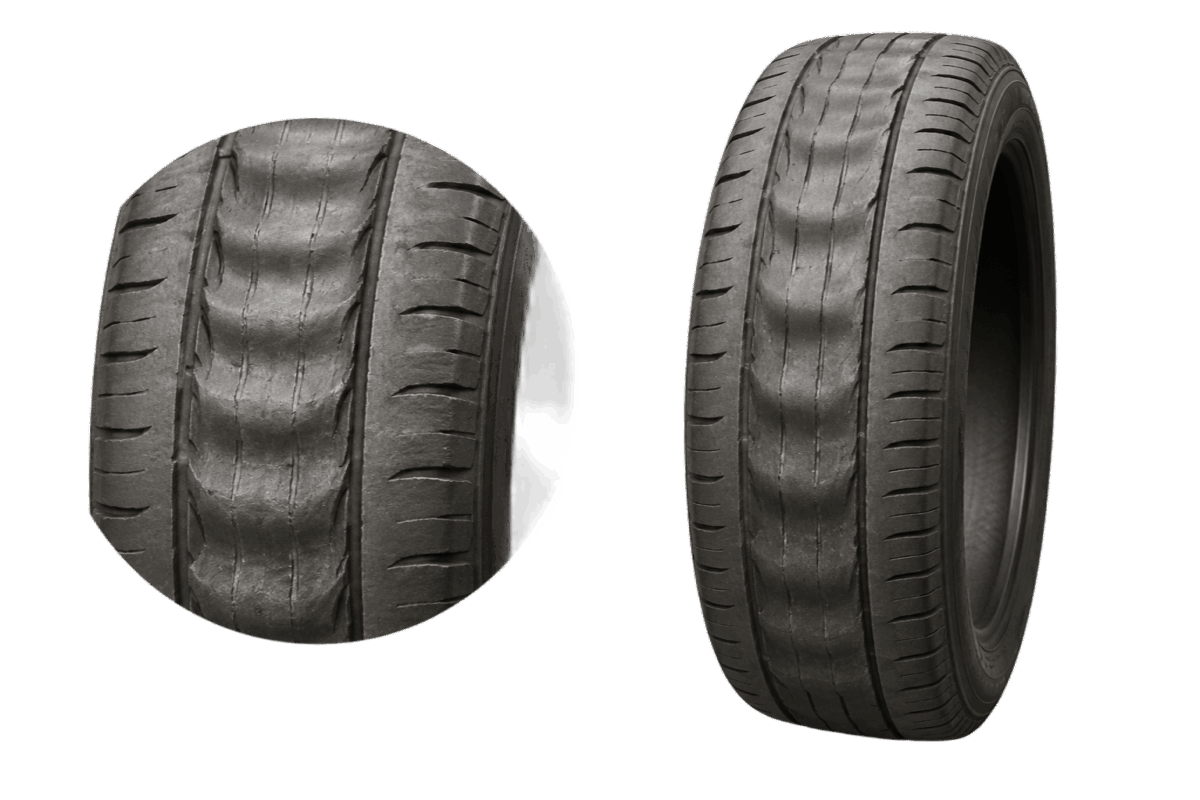
Tyre cupping occurs when sections of the tyre tread develop uneven, scalloped dips or hollow patches around the circumference of the tyre. Instead of wearing down evenly, certain tread areas become lower than others, creating a repeated pattern that can often be felt by hand and heard while driving.
Drivers commonly describe the symptoms as:
- A humming or droning road noise
- Repeated vibration through the steering wheel
- A rough feeling while driving
- Uneven tread surfaces that feel like waves or small dips
Unlike normal tyre wear caused by mileage, tyre cupping usually indicates that another vehicle component is not allowing the tyre to maintain consistent contact with the road.
For motorists in Kenya, where vehicles experience a wide range of conditions including rough roads, potholes, speed bumps, heavy traffic, and long-distance highway travel, identifying early signs of uneven tyre wear is essential. A small suspension or balancing issue can gradually shorten tyre life and increase operating costs.
Mufamo Automotives helps vehicle owners understand the importance of proper automotive maintenance, safety upgrades, and professional solutions. From vehicle technology to automotive support services, you can learn more about our trusted automotive solutions through our main automotive services.
This guide explains what causes tyre cupping, how to identify it, how it differs from other tyre wear patterns, and what steps vehicle owners should take to correct the problem.
What Is Tyre Cupping and Why Does the Tread Look Scalloped?
Tyre cupping is an uneven wear condition where sections of the tyre tread develop alternating high and low areas. These worn patches usually appear as small dips or scoops across the tread surface, creating a scalloped appearance.
A healthy tyre should rotate smoothly while maintaining consistent pressure against the road. When suspension components, wheel balance, or other mechanical systems fail to control tyre movement properly, the tyre can repeatedly bounce or lose full contact with the road surface.
Each time the tyre loses consistent contact, certain tread sections experience more friction than others. Over thousands of kilometres, this repeated pattern creates the cupped appearance.
How Tyre Cupping Changes the Tread Pattern
A tyre affected by tyre cupping may show:
- Alternating high and low spots around the tyre
- Uneven tread blocks
- A wave-like pattern across the surface
- Small depressions that repeat around the circumference
The wear is usually easier to notice by running your hand across the tread rather than simply looking at the tyre.
A driver may notice that the tyre feels smooth in some areas but has noticeable dips or raised sections in others.
Common Causes of Tyre Cupping in Vehicles
Why Does Tyre Cupping Happen?
Understanding the cause of tyre cupping is important because replacing tyres without correcting the underlying issue can result in the same problem happening again.
Several mechanical and maintenance factors can contribute to scalloped tyre wear.
Worn Shock Absorbers and Suspension Problems
How Faulty Shocks Lead to Tyre Cupping
One of the most common causes of tyre cupping is worn shock absorbers.
Shock absorbers help control the movement of the suspension system. Their main role is to keep the tyre firmly connected to the road by controlling bouncing and movement after bumps or uneven surfaces.
When shocks become weak:
- The tyre may bounce excessively
- Road contact becomes inconsistent
- Certain tread sections experience more pressure than others
- Uneven wear develops over time
A vehicle with worn shocks may still feel normal during everyday driving, but the tyres can gradually develop scalloped wear patterns.
This is why suspension inspection should always be part of diagnosing tyre cupping.
Wheel Imbalance and Tyre Cupping
The Connection Between Wheel Balance and Uneven Wear
Wheel imbalance is another common contributor to tyre cupping.
A properly balanced wheel rotates smoothly at different speeds. When weight distribution around the wheel is uneven, the tyre may experience vibration.
Common signs of wheel imbalance include:
- Steering wheel vibration
- Vehicle shaking at certain speeds
- Uneven tyre wear
- Increased road noise
If imbalance is ignored for a long period, repeated vibration can contribute to irregular tread wear.
Professional wheel balancing ensures that the tyre and wheel assembly rotate smoothly, reducing unnecessary stress on suspension components and tyres.
Tyre Cupping vs Other Types of Uneven Tyre Wear
Not all uneven tyre wear patterns mean the same thing. Correct identification helps technicians find the real cause.
| Wear Pattern | Appearance | Common Cause |
|---|---|---|
| Tyre cupping | Scalloped dips around tread | Worn shocks, imbalance, suspension issues |
| Feathering | Sharp edge on one side of tread blocks | Toe alignment problems |
| Shoulder wear | Outer or inner edge worn down | Incorrect pressure or alignment |
| Centre wear | Middle of tread worn more | Overinflation |
| Edge wear | Both shoulders worn | Underinflation |
Recognising these differences prevents unnecessary tyre replacement without addressing the mechanical problem.
For example, replacing tyres affected by tyre cupping without repairing worn suspension components may only provide a temporary solution.
How to Identify Tyre Cupping Before It Gets Worse
Physical Signs of Tyre Cupping During Inspection
Early detection of tyre cupping can help prevent premature tyre replacement and improve driving safety.
Drivers should look for these warning signs:
Uneven Tread Surface
Run your hand across the tyre tread. A healthy tyre should feel consistent. Cupped tyres may feel uneven, with repeated dips or raised sections.
Increased Road Noise
Many drivers first notice tyre cupping because of sound.
The tyre may produce:
- Humming noises
- Droning sounds
- Rhythmic road noise that increases with speed
This sound is often confused with wheel bearing problems, making proper inspection important.
Steering Vibrations
If the front tyres are affected, vibration may be felt through the steering wheel.
Rear tyre cupping may create vibration through the vehicle body or seats.
Uneven Visual Appearance
Look across the tread surface for:
- Repeating low spots
- Scalloped patterns
- Irregular tread blocks
Early inspection can identify problems before they become severe.
Mufamo Automotives Contacts
Email: sales@mufamoautomotives.co.ke
Phone: +254 762 228 888
Branches:
- Nairobi – Kumasi Road & Gilgil Road
- Eldoret – Uasin Gishu, Eldoret CBD
- Busia – Burumba
- Mombasa – Tiktac Kona
Website: https://mufamoautomotives.co.ke
Sales & Wholesale Enquiries
For tyre solutions, automotive products, bulk purchases, reseller opportunities, vehicle maintenance support, and professional automotive services, contact the Mufamo Automotives team for reliable assistance and competitive solutions.
