
Tyre Buying Guides
Uneven Tyre Wear Patterns Explained | Ultimate Diagnosis Guide
Jul
Tyres are one of the few components on your vehicle that maintain constant contact with the road, making their condition a reliable indicator of your vehicle’s overall health. Uneven tyre wear is not simply a cosmetic issue or an unavoidable consequence of driving—it is often an early warning sign that something is wrong with your tyre pressure, wheel alignment, suspension, steering components, or driving habits.
Understanding uneven tyre wear can help you diagnose problems before they become expensive repairs. A tyre that wears unevenly may reduce braking performance, compromise handling, increase fuel consumption, shorten tyre life, and raise the risk of tyre failure. By recognising different wear patterns early, drivers can correct the underlying cause and extend the lifespan of their tyres.
Whether you drive through Nairobi’s busy streets, cover long highway distances between Eldoret and Mombasa, or operate commercial vehicles across Kenya, knowing how to identify uneven tyre wear is essential for vehicle safety and operating efficiency.
At Mufamo Automotives, we help motorists and fleet operators maintain safer vehicles through professional automotive solutions, including vehicle tracking (vehicle-tracking), fleet management solutions (fleet-management-solutions), vehicle security systems (car-security-systems), and premium automotive accessories.
What Is Uneven Tyre Wear?
Uneven tyre wear occurs when one part of a tyre’s tread wears faster than another. Instead of wearing evenly across the entire tread surface, certain sections become noticeably thinner, indicating that the tyre is not making uniform contact with the road.
A healthy tyre should wear evenly from one shoulder to the other throughout its service life. When this doesn’t happen, the tyre is effectively telling you that another vehicle component or maintenance practice needs attention.
Ignoring uneven tyre wear often results in premature tyre replacement and can lead to more serious mechanical issues if the root cause is left unresolved.
Why Understanding Uneven Tyre Wear Matters
Learning to identify uneven tyre wear offers several important benefits:
- Improves vehicle safety
- Extends tyre lifespan
- Reduces fuel consumption
- Prevents costly suspension repairs
- Improves braking performance
- Enhances steering response
- Reduces road noise
- Improves ride comfort
Regular tyre inspections allow you to identify wear patterns before they become severe.
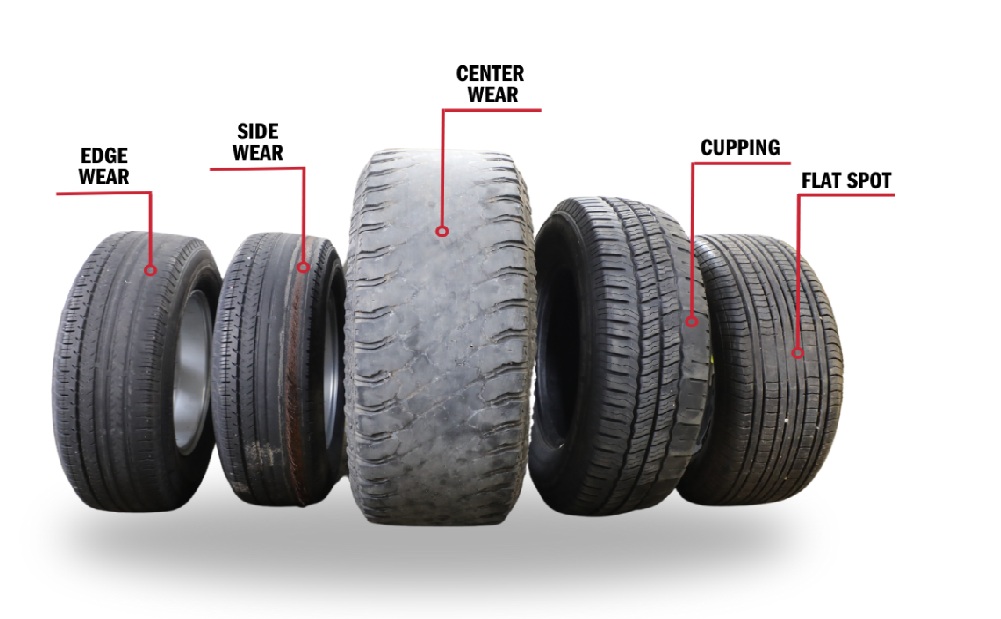
7 Common Uneven Tyre Wear Patterns and Their Causes
1. Centre Wear
Centre tread wear occurs when the middle section of the tyre wears faster than both shoulders.
Common Causes
- Overinflated tyres
- Excessive tyre pressure
- Incorrect maintenance
Solution
Maintain tyre pressures according to the manufacturer’s recommendations and check pressures monthly.
2. Shoulder Wear
Shoulder wear appears when both outer edges of the tyre wear faster than the centre.
Common Causes
- Underinflated tyres
- Carrying heavy loads with low tyre pressure
- Poor maintenance
Solution
Regularly inspect tyre pressure and adjust it before long journeys or heavy loading.
3. Inner Edge Wear
Inner edge uneven tyre wear often affects only one side of the tread.
Common Causes
- Incorrect wheel alignment
- Excessive negative camber
- Worn suspension components
Solution
Schedule a professional wheel alignment and inspect suspension parts.
4. Outer Edge Wear
Outer shoulder wear commonly indicates alignment issues affecting the opposite direction.
Possible Causes
- Positive camber
- Aggressive cornering
- Suspension wear
Solution
Have the suspension and alignment professionally inspected.
5. Feathering
Feathering creates a tread surface that feels smooth in one direction and sharp in the other.
Common Causes
- Incorrect toe alignment
- Steering geometry issues
Solution
Wheel alignment usually corrects this problem.
6. Cupping (Scalloping)
Cupping appears as alternating high and low spots around the tyre.
Common Causes
- Worn shock absorbers
- Damaged suspension
- Unbalanced wheels
Solution
Replace worn suspension components and rebalance the wheels.
7. Patch Wear
Patch wear consists of isolated worn sections around the tread.
Possible Causes
- Emergency braking
- Wheel imbalance
- Suspension faults
Solution
Inspect braking, suspension, and wheel balance.
Uneven Tyre Wear Pattern Comparison
| Wear Pattern | Most Likely Cause | Recommended Solution |
|---|---|---|
| Centre Wear | Overinflation | Adjust tyre pressure |
| Shoulder Wear | Underinflation | Inflate correctly |
| Inner Edge | Wheel alignment | Perform alignment |
| Outer Edge | Camber issues | Suspension inspection |
| Feathering | Toe alignment | Wheel alignment |
| Cupping | Worn shocks | Replace suspension parts |
| Patch Wear | Wheel imbalance | Balance wheels |
How Tyre Pressure Causes Uneven Tyre Wear
Incorrect tyre pressure remains one of the leading causes of uneven tyre wear.
Overinflation
Too much pressure causes the centre of the tread to bear most of the vehicle’s weight.
Underinflation
Low pressure increases contact on the tyre shoulders, accelerating edge wear.
Checking tyre pressure at least once a month helps prevent both conditions.
Wheel Alignment and Uneven Tyre Wear
Poor wheel alignment changes how the tyre contacts the road surface.
Misaligned wheels can cause:
- Inner edge wear
- Outer edge wear
- Feathering
- Reduced tyre life
- Poor steering
Drivers should perform wheel alignment whenever:
- New tyres are installed
- Suspension parts are replaced
- The vehicle hits a large pothole
- Steering feels uneven
Suspension Problems That Cause Uneven Tyre Wear
Your suspension keeps the tyres firmly planted on the road.
Worn suspension components may include:
- Shock absorbers
- Struts
- Ball joints
- Control arms
- Bushings
Damaged suspension often produces cupping or irregular uneven tyre wear.
Driving Habits That Affect Tyre Wear
Even with correct maintenance, driving style influences tyre life.
Habits that increase uneven tyre wear include:
- Hard braking
- Rapid acceleration
- Fast cornering
- Overloading
- Striking potholes
- Driving with incorrect tyre pressure
Smooth driving helps tyres wear more evenly.
How to Prevent Uneven Tyre Wear
Preventing uneven tyre wear is usually easier and less expensive than replacing damaged tyres.
Follow these maintenance practices:
- Check tyre pressure monthly.
- Rotate tyres every 8,000–10,000 km.
- Perform wheel alignment when required.
- Balance wheels after tyre installation.
- Inspect suspension annually.
- Replace worn steering components promptly.
Fleet operators can also improve maintenance scheduling using our fleet management solutions:
Professional Tyre Inspection
If you notice uneven tyre wear, have your vehicle inspected before replacing the tyres.
A professional inspection should include:
- Wheel alignment
- Suspension inspection
- Steering inspection
- Wheel balancing
- Tyre pressure check
While servicing your vehicle, you can also explore:
- Reverse camera systems: car-reverse-cameras
- Parking sensors: car-parking-sensors
- Dash cameras: dash-cameras
- Automotive accessories: car-accessories
Frequently Asked Questions
What causes uneven tyre wear?
The most common causes are incorrect tyre pressure, poor wheel alignment, suspension problems, worn steering components, and improper tyre rotation.
Can wheel alignment fix uneven tyre wear?
Wheel alignment corrects the cause of many wear patterns but cannot restore tread that has already worn away.
How often should tyres be rotated?
Most manufacturers recommend rotating tyres every 8,000–10,000 kilometres or according to the owner’s manual.
Is uneven tyre wear dangerous?
Yes. It can reduce braking performance, affect handling, increase stopping distances, and raise the risk of tyre failure.
Can suspension problems damage tyres?
Yes. Worn shock absorbers, struts, and other suspension components often produce irregular wear patterns such as cupping.
Conclusion
Uneven tyre wear is one of the clearest indicators that your vehicle needs attention. Rather than simply replacing worn tyres, it’s important to identify and correct the underlying cause—whether it’s tyre pressure, wheel alignment, suspension wear, or driving habits. Addressing these issues early improves safety, extends tyre life, reduces operating costs, and enhances overall driving performance.
Regular inspections, proper maintenance, and professional servicing are the best ways to prevent uneven tyre wear and keep your vehicle operating safely on Kenyan roads. At Mufamo Automotives, we’re committed to helping motorists and businesses choose the right automotive solutions for long-term reliability and performance.
Your Trusted Automotive Technology & Vehicle Security Partner in Kenya
Whether you’re securing a personal vehicle, managing a commercial fleet, or upgrading your vehicle with the latest automotive technology, Mufamo Automotives delivers reliable, high-quality solutions backed by professional installation and exceptional customer support. From GPS vehicle tracking and fleet management systems to car security, reverse cameras, parking sensors, dash cameras, and premium automotive accessories, we help keep your vehicles safer, smarter, and more efficient.
Contact our team today for expert advice, product recommendations, or a customized quotation.
WHY CHOOSE MUFAMO AUTOMOTIVES
✔ Professional Vehicle Security Solutions
✔ Advanced GPS Tracking & Fleet Management
✔ Genuine Automotive Accessories
✔ Expert Installation Services
✔ Wholesale & Business Partnership Opportunities
✔ Serving Nairobi, Mombasa, Eldoret, Busia, Uasin Gishu, Tiktac Kona, and beyond.
Contact Mufamo Automotives
Email: sales@mufamoautomotives.co.ke
Phone: +254 762 228 888
Branches
- Nairobi – Kumasi Road & Gilgil Road
- Eldoret – Uasin Gishu, Eldoret CBD
- Busia – Burumba
- Mombasa – Tiktac Kona
Website: https://mufamoautomotives.co.ke
Sales & Wholesale Enquiries
For pricing, stock availability, bulk purchases, reseller opportunities, and business partnerships, contact our sales team for competitive pricing and reliable supply solutions.
Request a Quote today and experience trusted automotive technology, vehicle security, and fleet management solutions from Mufamo Automotives.
