
Tyre Buying Guides & Automotive Safety
How to Spot Fake Tyres and Old Stock Before You Hand Over Cash
Jul
Buying new tyres is a major safety decision. Whether you are replacing tyres on a personal car, SUV, pickup, truck, or commercial fleet vehicle, choosing the wrong product can affect braking, handling, fuel efficiency, and overall road safety. This is why knowing how to spot fake tyres before making payment is essential for every vehicle owner.
Counterfeit tyres and old tyre stock can sometimes look almost identical to genuine products, especially when displayed by inexperienced sellers or mixed with original inventory. A tyre may have familiar branding, attractive pricing, and professional-looking packaging, but hidden issues such as poor rubber quality, incorrect markings, or outdated manufacturing dates can create serious risks.
Understanding how to spot fake tyres allows buyers to make informed decisions. By checking the DOT manufacturing code, inspecting sidewall details, comparing mould quality, verifying seller documents, and avoiding suspiciously low prices, motorists can reduce the chances of purchasing unsafe products.
At Mufamo Automotives, we understand that vehicle safety depends on quality components. Alongside reliable tyre advice, we provide advanced automotive solutions including vehicle security systems, GPS vehicle tracking solutions, and professional vehicle technology services designed to protect drivers and businesses across Kenya.
Why Learning How to Spot Fake Tyres Matters for Road Safety
Knowing how to spot fake tyres helps drivers avoid products that may fail prematurely, perform poorly, or compromise vehicle safety. Genuine tyres are manufactured under strict quality standards, while counterfeit products may not meet required safety expectations.
Tyres are the only part of a vehicle that maintains direct contact with the road. Every acceleration, braking action, cornering movement, and emergency manoeuvre depends on tyre condition and quality.
Using counterfeit or poor-quality tyres can result in:
- Reduced road grip
- Longer braking distances
- Faster tread wear
- Increased risk of punctures
- Poor wet-weather performance
- Uneven vehicle handling
- Unexpected tyre failure
This makes tyre selection especially important in Kenya, where vehicles may experience different road conditions ranging from Nairobi highways to rough rural routes, construction areas, and long-distance transport corridors.
A genuine tyre provides predictable performance because it is designed, tested, and manufactured according to industry standards. Fake tyres often imitate the appearance of original brands but lack the same material quality and engineering.
How to Spot Fake Tyres Before Buying: Key Warning Signs
Learning how to spot fake tyres requires careful inspection of physical features, markings, pricing, and supplier information. Several warning signs can reveal whether a tyre may not be genuine.
Before paying for new tyres, buyers should inspect the following areas:
Check the Tyre Branding and Sidewall Markings
One of the easiest ways to begin identifying counterfeit tyres is by examining the sidewall.
Genuine tyres usually have:
- Clear manufacturer branding
- Accurate size markings
- Consistent lettering
- Correct load and speed ratings
- Proper safety symbols
- High-quality moulded details
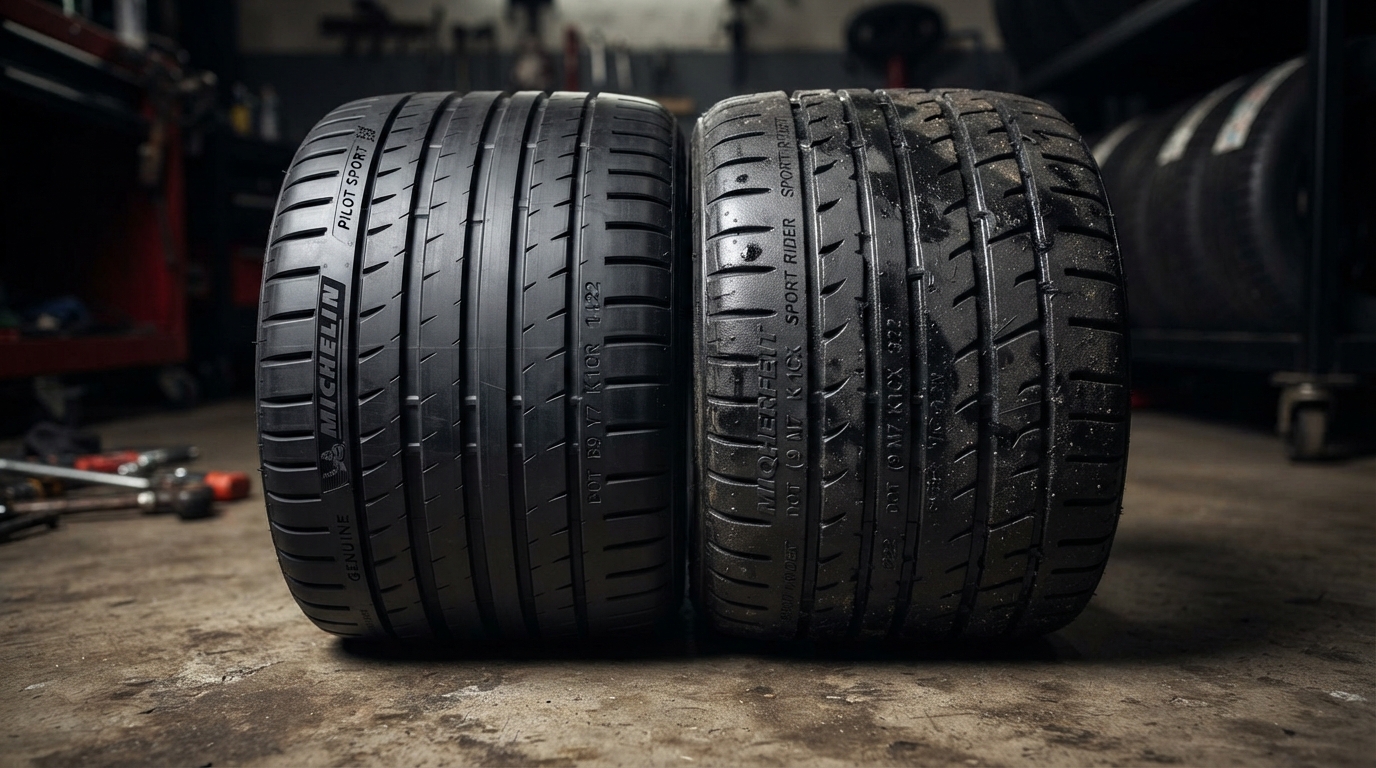
When learning how to spot fake tyres, pay attention to unusual differences in fonts, spacing, spelling, and logo appearance.
Counterfeit products may have:
- Misspelled brand names
- Uneven lettering
- Poor-quality printing
- Incorrect tyre specifications
- Missing certification markings
A genuine tyre manufacturer invests heavily in accurate moulding technology. Poor sidewall finishing is often an early indication that a product may not be authentic.
How to Spot Fake Tyres Through Manufacturing Quality
The physical construction quality of a tyre can reveal important clues about authenticity. Genuine tyres usually have consistent finishing, while fake tyres may show visible production defects.
Inspect the tyre carefully for:
Uneven Rubber Finishing
Quality tyres have smooth and consistent rubber surfaces. Fake products may show rough patches, irregular lines, or inconsistent textures.
Poor Moulding Details
Manufacturing marks, grooves, and lettering should appear clean and precise. Blurry or uneven patterns can indicate poor production standards.
Irregular Tread Patterns
The tread design should match the manufacturer’s official specifications. Differences in tread blocks, grooves, or patterns may indicate a counterfeit product.
Excessive Rubber Flashing
Small rubber edges from moulding are normal, but excessive unfinished rubber may indicate poor manufacturing processes.
Drivers looking to upgrade their vehicles with additional safety technology can also explore dash camera solutions to improve visibility and provide valuable road records.
How to Spot Fake Tyres by Checking the DOT Manufacturing Date
The DOT code is one of the most important checks when learning how to spot fake tyres and old tyre stock. It helps identify when a tyre was manufactured and whether it has been stored for too long.
Every genuine tyre carries a DOT identification code on the sidewall. The final four digits usually indicate the production week and year.
For example:
- First two digits = manufacturing week
- Last two digits = manufacturing year
A tyre showing an older manufacturing date may not be counterfeit, but it requires careful consideration. Rubber compounds naturally age over time, even when tyres have never been fitted to a vehicle.
Old stock risks include:
- Reduced rubber flexibility
- Lower performance
- Increased cracking risk
- Reduced service life
When buying tyres, always ask the supplier for the manufacturing date before payment.
How Old Tyre Stock Differs from Fresh Genuine Tyres
Old tyre stock is not always fake, but buyers should understand the difference between unused tyres and recently manufactured tyres. Knowing how to identify tyre age helps prevent purchasing products that have already lost part of their useful lifespan.
A tyre stored correctly in a controlled environment may remain usable for years, but poor storage conditions can accelerate ageing.
Avoid tyres stored in places with:
- Direct sunlight exposure
- Excessive heat
- Moisture
- Chemicals
- Poor ventilation
A trustworthy seller should provide clear information about tyre origin, storage conditions, and manufacturing dates.
Questions to Ask Before Buying New Tyres
Knowing how to spot fake tyres is easier when buyers ask the right questions before completing a purchase. A professional supplier should be transparent about product details and warranty information.
Before buying, ask:
- Is this tyre brand new?
- What is the DOT manufacturing date?
- Where was the tyre manufactured?
- Does it come with manufacturer warranty?
- Can you provide purchase documentation?
- Are matching tyres available?
Avoid sellers who refuse to provide basic product information or pressure customers into immediate payment.
For additional vehicle upgrades, motorists can explore reverse camera systems and parking sensor installation services to improve driving safety.
Conclusion: Make Safety the Priority When Buying Tyres
Knowing how to spot fake tyres before purchasing can protect your vehicle, your passengers, and your investment. Counterfeit tyres and poorly stored old stock may appear attractive because of lower prices, but they can compromise braking performance, handling, durability, and overall road safety.
For drivers, transport companies, and fleet operators in Kenya, choosing quality tyres is only one part of maintaining a safe and reliable vehicle. Combining proper tyre selection with modern automotive technology such as GPS vehicle tracking solutions, fleet management solutions, and advanced vehicle security systems helps improve vehicle protection, efficiency, and operational control.
When you understand how to spot fake tyres, you can make confident purchasing decisions and avoid unnecessary risks caused by counterfeit products, unreliable sellers, or ageing tyre stock.
Your Trusted Automotive Technology & Vehicle Security Partner in Kenya
Whether you’re securing a personal vehicle, managing a commercial fleet, or upgrading your vehicle with the latest automotive technology, Mufamo Automotives delivers reliable, high-quality solutions backed by professional installation and exceptional customer support.
From GPS vehicle tracking and fleet management systems to car security, reverse cameras, parking sensors, dash cameras, and premium automotive accessories, we help keep your vehicles safer, smarter, and more efficient.
Contact our team today for expert advice, product recommendations, or a customized quotation.
Why Choose Mufamo Automotives?
- Professional Vehicle Security Solutions
- Advanced GPS Tracking & Fleet Management
- Genuine Automotive Accessories
- Expert Installation Services
- Wholesale & Business Partnership Opportunities
- Serving Nairobi, Mombasa, Eldoret, Busia, Uasin Gishu, Tiktac Kona, and customers across Kenya
Contact Mufamo Automotives
Website: https://mufamoautomotives.co.ke
Email: sales@mufamoautomotives.co.ke
Phone: +254 762 228 888
