
Tyre Guides
Noisy Tyres Warning Signs | Ultimate Guide to Road Roar
Jul
Tyres naturally generate some level of road noise as they roll across different road surfaces. However, when noisy tyres suddenly become louder, develop a humming sound, produce a rhythmic roar, or create unusual vibrations, they may be warning you about an underlying problem. Knowing the difference between normal tyre noise and abnormal sounds can help you prevent costly repairs while improving vehicle safety.
Many motorists dismiss noisy tyres as an unavoidable part of driving, especially on rough Kenyan roads. While road surface, tread design, and tyre type certainly influence noise levels, excessive tyre noise can also indicate uneven tread wear, poor wheel alignment, damaged wheel bearings, suspension faults, or tyres that are approaching the end of their service life.
Across Kenya, drivers frequently travel on varying road surfaces ranging from smooth highways to rough gravel roads, pothole-filled streets, and worn asphalt. These changing conditions affect tyre wear patterns and often contribute to increased road noise over time. Recognising when noisy tyres are simply responding to the road and when they are signalling a mechanical issue can help you maintain a quieter, safer, and more efficient vehicle.
This comprehensive guide explains the most common causes of noisy tyres, how to identify different types of tyre noise, what inspections you should perform, and when professional servicing becomes necessary.
At Mufamo Automotives, we help motorists and fleet operators maintain reliable vehicles through quality automotive products and professional automotive technology solutions. Alongside premium tyres, we also provide our vehicle tracking solutions (vehicle-tracking), fleet management solutions (fleet-management-solutions), vehicle security systems (car-security-systems), and a wide range of automotive accessories throughout Kenya.
What Causes Noisy Tyres?
Noisy tyres occur when vibrations generated by the tyre transfer into the vehicle cabin as sound. Every tyre produces some level of noise, but excessive or unusual sounds often indicate changes in tyre condition or vehicle components.
Common causes include:
- Aggressive tread patterns
- Uneven tyre wear
- Incorrect tyre pressure
- Wheel alignment problems
- Wheel bearing failure
- Suspension wear
- Damaged tyres
- Rough road surfaces
Understanding the source of the noise helps determine whether it is normal or requires immediate attention.
When Are Noisy Tyres Perfectly Normal?
Not every case of noisy tyres indicates a fault.
Certain tyres naturally generate more road noise due to their design.
Examples include:
All-Terrain Tyres
Large tread blocks create additional air movement and vibration, producing more road roar than highway tyres.
Mud-Terrain Tyres
These tyres prioritise off-road grip over quiet operation and are among the loudest tyres available.
Performance Tyres
High-grip compounds and wide tread patterns often produce noticeable tyre noise, particularly on coarse asphalt.
Rough Road Surfaces
Driving on rough tarmac, gravel, or concrete roads naturally increases tyre noise even when the tyres are in excellent condition.
7 Warning Signs That Noisy Tyres Indicate a Problem
1. Cupped Tyres
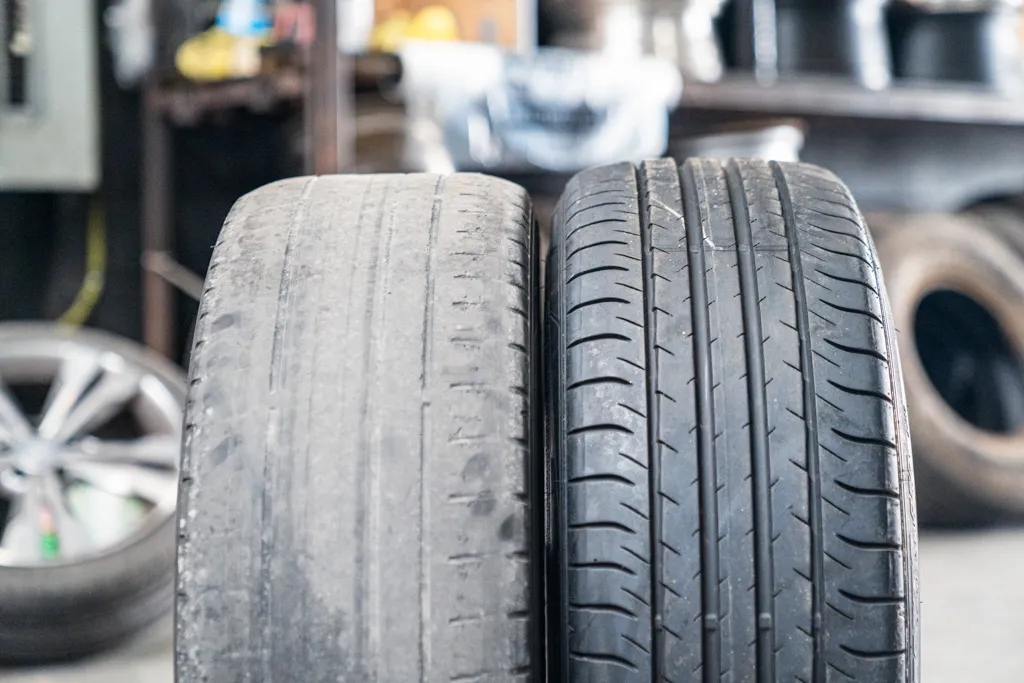
One of the most common causes of noisy tyres is tyre cupping.
Cupping creates alternating high and low spots around the tread.
Common Symptoms
- Rhythmic humming
- Loud roaring
- Vibration
- Uneven tread wear
Common Causes
- Worn shock absorbers
- Suspension damage
- Wheel imbalance
Professional suspension inspection is recommended.
2. Feathered Tread Wear
Feathering occurs when tread blocks wear unevenly across their edges.
This creates a distinctive humming or buzzing sound.
Common Causes
- Incorrect toe alignment
- Poor wheel alignment
- Suspension issues
Wheel alignment usually resolves the underlying cause.
3. Worn Wheel Bearings
Drivers often mistake wheel bearing failure for noisy tyres because both produce similar humming or growling sounds.
Typical symptoms include:
- Noise increases with speed.
- Noise changes while cornering.
- Constant humming.
Wheel bearings should be inspected immediately if suspected.
4. Incorrect Tyre Pressure
Both overinflation and underinflation can increase tyre noise.
Incorrect pressure changes the tyre’s contact patch, creating additional vibration and road roar.
Maintaining manufacturer-recommended tyre pressure improves both comfort and tyre life.
5. Uneven Tyre Wear
Irregular tread wear changes how the tyre contacts the road.
Common wear patterns include:
- Centre wear
- Shoulder wear
- Inside edge wear
- Outside edge wear
These conditions often increase road noise while reducing tyre lifespan.
6. Wheel Alignment Problems
Incorrect wheel alignment changes tyre contact with the road surface.
Signs include:
- Vehicle pulling sideways
- Crooked steering wheel
- Rapid tyre wear
- Increased tyre noise
Professional alignment restores proper tyre performance.
7. Damaged Tyres
Impact damage from potholes may weaken tyre structure without causing immediate air loss.
Internal damage may produce:
- Thumping sounds
- Vibration
- Increased road roar
Drivers should inspect tyres after significant pothole impacts.
Different Types of Tyre Noise
| Noise Type | Possible Cause | Recommended Action |
|---|---|---|
| Humming | Wheel bearing or feathering | Inspection |
| Roaring | Aggressive tread or cupping | Suspension check |
| Thumping | Internal tyre damage | Replace tyre if necessary |
| Buzzing | Feathered tread | Wheel alignment |
| Vibration | Bent wheel or imbalance | Wheel balancing |
Can Road Surface Cause Noisy Tyres?
Yes.
Kenyan roads vary considerably in texture.
Tyres are generally quieter on:
- Smooth asphalt
- Fresh tarmac
They become louder on:
- Rough asphalt
- Concrete roads
- Gravel roads
- Worn highways
If the noise changes immediately with road surface, the tyres are often functioning normally.
How to Diagnose Noisy Tyres
If you notice noisy tyres, begin by checking:
- Tyre pressure
- Tread depth
- Tread wear pattern
- Wheel damage
- Suspension condition
Pay attention to:
- Whether noise changes with speed
- Whether noise changes while cornering
- Whether vibration accompanies the noise
These clues help identify the source.
How to Prevent Noisy Tyres
Many cases of noisy tyres can be prevented through regular maintenance.
Follow these recommendations:
- Check tyre pressure monthly.
- Rotate tyres every 8,000–10,000 km.
- Balance wheels after tyre installation.
- Perform wheel alignment annually.
- Replace worn suspension components.
- Inspect tyres after hitting potholes.
Fleet operators can reduce tyre-related maintenance costs by using our fleet management solutions:
Professional Inspection
If noisy tyres suddenly become louder or are accompanied by vibration or steering changes, arrange a professional inspection.
A complete inspection should include:
- Tyre examination
- Wheel balancing
- Wheel alignment
- Suspension inspection
- Wheel bearing inspection
- Steering inspection
While maintaining your vehicle, you can also explore our:
- Reverse camera systems: car-reverse-cameras
- Parking sensors: car-parking-sensors
- Dash camera solutions: dash-cameras
- Automotive accessories: car-accessories
Frequently Asked Questions
Are noisy tyres always dangerous?
No. Some tyres naturally produce more road noise due to their tread design. However, sudden or excessive tyre noise should always be investigated.
Can wheel bearings sound like noisy tyres?
Yes. Failing wheel bearings often produce humming or growling sounds that resemble tyre noise.
Can wheel alignment reduce tyre noise?
Yes. Correct wheel alignment promotes even tyre wear and often eliminates noise caused by feathering or uneven tread.
Do all-terrain tyres make more noise?
Yes. Their larger tread blocks generate more road roar than standard highway tyres.
When should I replace noisy tyres?
Replace tyres if noise is caused by severe uneven wear, internal damage, exposed cords, or tread below the recommended depth.
Conclusion
Noisy tyres are not always a sign of trouble, but they should never be ignored when the sound changes suddenly or becomes unusually loud. While aggressive tread patterns and rough road surfaces naturally create more road roar, excessive tyre noise may also point to uneven tread wear, wheel alignment issues, worn suspension components, damaged tyres, or failing wheel bearings.
Regular tyre inspections, correct inflation, routine wheel alignment, and suspension maintenance will help keep your vehicle quieter, safer, and more comfortable to drive. By identifying the true cause of noisy tyres early, you can avoid unnecessary tyre replacements and more expensive mechanical repairs.
Your Trusted Automotive Technology & Vehicle Security Partner in Kenya
Whether you’re securing a personal vehicle, managing a commercial fleet, or upgrading your vehicle with the latest automotive technology, Mufamo Automotives delivers reliable, high-quality solutions backed by professional installation and exceptional customer support. From GPS vehicle tracking and fleet management systems to car security, reverse cameras, parking sensors, dash cameras, and premium automotive accessories, we help keep your vehicles safer, smarter, and more efficient.
Contact our team today for expert advice, product recommendations, or a customized quotation.
WHY CHOOSE MUFAMO AUTOMOTIVES
✔ Professional Vehicle Security Solutions
✔ Advanced GPS Tracking & Fleet Management
✔ Genuine Automotive Accessories
✔ Expert Installation Services
✔ Wholesale & Business Partnership Opportunities
✔ Serving Nairobi, Mombasa, Eldoret, Busia, Uasin Gishu, Tiktac Kona, and beyond.
Contact Mufamo Automotives
Email: sales@mufamoautomotives.co.ke
Phone: +254 762 228 888
Branches
- Nairobi – Kumasi Road & Gilgil Road
- Eldoret – Uasin Gishu, Eldoret CBD
- Busia – Burumba
- Mombasa – Tiktac Kona
Website: https://mufamoautomotives.co.ke
Sales & Wholesale Enquiries
For pricing, stock availability, bulk purchases, reseller opportunities, and business partnerships, contact our sales team for competitive pricing and reliable supply solutions.
Request a Quote today and experience trusted automotive technology, vehicle security, and fleet management solutions from Mufamo Automotives.
