
Tyre Guides
Pothole Tyre Damage Checks Every Driver Should Know
Jul
Every driver dreads the sudden thud that comes from hitting a pothole. Whether you’re navigating busy streets in Nairobi, travelling along highways to Mombasa, or driving through rural roads across Kenya, potholes are an unavoidable hazard. While some impacts seem harmless, pothole tyre damage can occur even when there are no immediate signs of trouble.
Many motorists continue driving after striking a pothole, unaware that the impact may have weakened the tyre’s internal structure, bent a wheel, damaged the suspension, or thrown the vehicle’s alignment out of specification. Ignoring pothole tyre damage can lead to rapid tyre wear, vibration, poor handling, reduced braking performance, and expensive repairs later.
The severity of pothole tyre damage depends on several factors, including the vehicle’s speed, tyre pressure, the depth of the pothole, wheel size, tyre profile, and vehicle load. Modern low-profile tyres and large alloy wheels are particularly vulnerable because they have less sidewall cushioning to absorb impacts.
This guide explains exactly what to inspect immediately after hitting a pothole, the warning signs to watch for, the types of damage potholes commonly cause, and when professional inspection is necessary.
At Mufamo Automotives, we help motorists and fleet operators protect their vehicles with professional automotive solutions. In addition to quality automotive products, we provide our vehicle tracking solutions (vehicle-tracking), fleet management systems (fleet-management-solutions), vehicle security solutions (vehicle-security-solutions), and premium automotive accessories throughout Kenya.
What Is Pothole Tyre Damage?
Pothole tyre damage refers to any damage sustained by the tyre, wheel, suspension, or steering system after a vehicle strikes a pothole.
When the tyre drops sharply into a pothole before impacting the opposite edge, enormous forces are transmitted through the wheel assembly.
This impact may damage:
- Tyres
- Alloy wheels
- Steel rims
- Suspension components
- Steering components
- Wheel alignment
Not every pothole causes visible damage, making inspection extremely important.
Why You Should Never Ignore Pothole Tyre Damage
Many cases of pothole tyre damage are hidden from view.
The tyre may appear normal externally while internal belts or sidewall cords have already been weakened.
Ignoring the damage can lead to:
- Sudden tyre failure
- Uneven tyre wear
- Poor steering response
- Reduced braking performance
- Wheel vibration
- Suspension damage
- Increased fuel consumption
A quick inspection immediately after the impact can prevent more costly repairs later.
7 Essential Checks After Hitting a Pothole
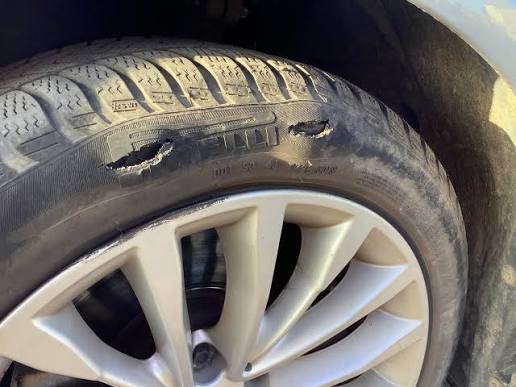
1. Inspect the Tyre Sidewall
The sidewall absorbs much of the impact energy during a pothole strike.
Look for:
- Bulges
- Cuts
- Cracks
- Splits
- Deep abrasions
A bulge often indicates broken internal cords and usually requires immediate tyre replacement.
2. Check Tyre Pressure
One of the first signs of pothole tyre damage is sudden air loss.
Inspect for:
- Low tyre pressure
- Slow leaks
- Visible punctures
- Valve damage
If pressure drops rapidly, install the spare wheel or seek roadside assistance.
3. Examine the Wheel or Rim
Potholes frequently damage alloy wheels.
Inspect for:
- Bent rims
- Cracks
- Chips
- Flat spots
Even minor rim damage can affect wheel balancing and tyre sealing.
4. Check for Steering Changes
After hitting a pothole, pay attention to how the vehicle drives.
Warning signs include:
- Steering wheel no longer centred
- Vehicle pulling left or right
- Increased steering effort
- Wandering at highway speeds
These symptoms often indicate wheel alignment has changed.
5. Listen for New Noises
Suspension damage caused by pothole tyre damage may produce:
- Knocking
- Clunking
- Rattling
- Squeaking
These noises often indicate worn or damaged suspension components requiring inspection.
6. Watch for Vibration
Wheel vibration after striking a pothole commonly results from:
- Bent wheels
- Damaged tyres
- Wheel imbalance
- Suspension issues
Vibration that increases with speed should never be ignored.
7. Inspect Tread Wear Over the Following Weeks
Some forms of pothole tyre damage only become noticeable later.
Watch for:
- Inside edge wear
- Outside edge wear
- Feathering
- Cupping
These wear patterns often indicate alignment or suspension damage.
Common Types of Pothole Tyre Damage
| Type of Damage | Common Symptoms | Recommended Action |
|---|---|---|
| Sidewall Bulge | Visible swelling | Replace tyre |
| Bent Rim | Vibration | Wheel repair or replacement |
| Wheel Misalignment | Vehicle pulls sideways | Wheel alignment |
| Suspension Damage | Knocking noises | Suspension inspection |
| Tyre Puncture | Air loss | Repair or replace tyre |
| Internal Tyre Damage | No visible signs | Professional inspection |
Can Potholes Damage Suspension?
Yes.
Although the tyre absorbs part of the impact, severe potholes can also damage:
- Shock absorbers
- Struts
- Ball joints
- Control arms
- Suspension bushes
- Steering tie rods
Drivers who regularly travel on rough roads should inspect suspension during routine servicing.
Can Pothole Tyre Damage Affect Wheel Alignment?
Absolutely.
Wheel alignment is one of the most common consequences of pothole tyre damage.
Misalignment may cause:
- Uneven tyre wear
- Crooked steering wheel
- Poor handling
- Increased fuel consumption
Professional wheel alignment should be performed if steering changes occur after impact.
Can You Continue Driving?
Whether you should continue driving depends on the severity of the pothole tyre damage.
Safe to continue cautiously if:
- Tyre pressure remains stable.
- No bulges are visible.
- Steering feels normal.
- No unusual noises occur.
Stop driving immediately if:
- Tyre is rapidly losing air.
- Sidewall bulges appear.
- Rim is visibly cracked.
- Steering becomes difficult.
- Suspension components appear damaged.
How to Reduce Pothole Damage
Although potholes cannot always be avoided, drivers can minimise pothole tyre damage by:
- Maintaining correct tyre pressure.
- Keeping a safe following distance.
- Reducing speed on rough roads.
- Avoiding sudden braking while striking a pothole.
- Inspecting tyres regularly.
- Performing wheel alignment after major impacts.
Fleet operators can improve maintenance scheduling using our fleet management solutions:
Professional Inspection After Pothole Tyre Damage
If you’re unsure whether pothole tyre damage has occurred, arrange a professional inspection.
A complete inspection should include:
- Tyre examination
- Wheel inspection
- Wheel balancing
- Wheel alignment
- Suspension inspection
- Steering inspection
While servicing your vehicle, you can also explore our:
- Reverse camera systems: car-reverse-cameras
- Parking sensors: car-parking-sensors
- Dash camera solutions: dash-cameras
- Automotive accessories: car-accessories
Frequently Asked Questions
Can a pothole damage a tyre without causing a puncture?
Yes. A pothole can weaken the tyre’s internal structure, damage sidewall cords, or bend the wheel without immediately causing air loss.
How do I know if my wheel alignment changed?
Common signs include the vehicle pulling to one side, an off-centre steering wheel, and uneven tyre wear.
Can potholes damage alloy wheels?
Yes. Severe impacts can bend, crack, or chip alloy wheels.
Should I replace a tyre with a sidewall bulge?
Yes. A sidewall bulge indicates internal structural damage that cannot be safely repaired.
How soon should I inspect my vehicle after hitting a pothole?
Ideally, inspect the tyre and wheel immediately after the impact and arrange a professional inspection if any unusual symptoms appear.
Conclusion
Pothole tyre damage is more than just a temporary inconvenience—it can compromise your tyres, wheels, suspension, steering, and overall vehicle safety. Even when there is no obvious puncture, hidden damage may lead to uneven tyre wear, poor handling, or unexpected tyre failure if left unchecked.
After hitting a pothole, inspect your tyres, wheels, and steering as soon as it is safe to do so. If you notice vibrations, air loss, steering changes, or unusual noises, arrange a professional inspection before the problem worsens. Regular tyre maintenance, proper inflation, and prompt wheel alignment checks will help keep your vehicle safe and extend tyre life on Kenya’s challenging roads.
Your Trusted Automotive Technology & Vehicle Security Partner in Kenya
Whether you’re securing a personal vehicle, managing a commercial fleet, or upgrading your vehicle with the latest automotive technology, Mufamo Automotives delivers reliable, high-quality solutions backed by professional installation and exceptional customer support. From GPS vehicle tracking and fleet management systems to car security, reverse cameras, parking sensors, dash cameras, and premium automotive accessories, we help keep your vehicles safer, smarter, and more efficient.
Contact our team today for expert advice, product recommendations, or a customized quotation.
WHY CHOOSE MUFAMO AUTOMOTIVES
✔ Professional Vehicle Security Solutions
✔ Advanced GPS Tracking & Fleet Management
✔ Genuine Automotive Accessories
✔ Expert Installation Services
✔ Wholesale & Business Partnership Opportunities
✔ Serving Nairobi, Mombasa, Eldoret, Busia, Uasin Gishu, Tiktac Kona, and beyond.
Contact Mufamo Automotives
Email: sales@mufamoautomotives.co.ke
Phone: +254 762 228 888
Branches
- Nairobi – Kumasi Road & Gilgil Road
- Eldoret – Uasin Gishu, Eldoret CBD
- Busia – Burumba
- Mombasa – Tiktac Kona
Website: https://mufamoautomotives.co.ke
Sales & Wholesale Enquiries
For pricing, stock availability, bulk purchases, reseller opportunities, and business partnerships, contact our sales team for competitive pricing and reliable supply solutions.
Request a Quote today and experience trusted automotive technology, vehicle security, and fleet management solutions from Mufamo Automotives.
